Game-based Assessment of Physics Competencies, Misconceptions, and Temporal Progressions
GAPCo
A new era of competence-oriented, personalized, game-based tutoring in physics education.
In STEM subjects, games are ideal for exploring and mastering content. The reseach project GAPCo develops intelligent physics learning games that identify learning, forgetting, and misconceptions to provide students with tailored learning experiences.
Scientific
Background
Games
Results
Serious Games Reseach
“The power of serious games lies in their ability to turn struggle into play, and play into mastery.”
Serious games (SGs) play an increasingly important role across disciplines due to their proven ability to foster learning and engagement. Their instructional potential is widely recognized; SGs promote active participation, deepen understanding of complex subjects, encourage collaboration, and sustain motivation. Designed specifically to support learning processes, they can be integrated into educational contexts to improve outcomes. Moreover, SGs offer flexible opportunities for practice and accessibility, enabling learners to revisit content anytime and anywhere. Research consistently shows that, when embedded in teaching, SGs enhance both academic performance and the overall learning experience.
Yet, gaming alone is not sufficient to fully harness the motivational and educational potential of digital play. Effective learning requires didactically informed personalization of learning trajectories to prevent under‑ or over‑challenging students. This personalization depends on fine‑grained assessment of competencies and learning progress, ideally conducted in a stealth fashion so as not to disrupt immersion.
Currently, artificial intelligence is reshaping educational research. By combining established didactic theories with well-elaborated structural competence modeling (e.g., Knowledge Space Theory) and machine learning, we can assess learner competencies more precisely and deliver tailored tutoring and adaptive support.
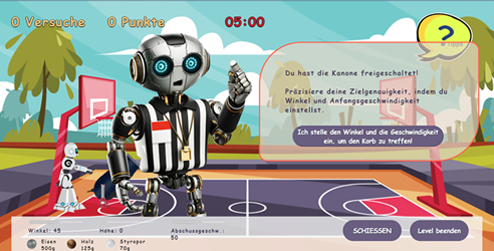
In GAPCo, our focus is on building dynamic learning environments in physics education, particularly addressing misconceptions in the domain of force and motion. We also investigate the temporal dynamics of learning, including the phenomenon of forgetting. Misconceptions are especially prevalent in physics: they represent partial or flawed knowledge that is difficult to distinguish from gaps in understanding. Developing educational technologies capable of identifying and remediating misconceptions is therefore a major challenge, both for educational research broadly and for serious games research in particular.
- Read more -
Team
“When learning becomes play and play becomes learning – the full potential of digital education unfolds.”
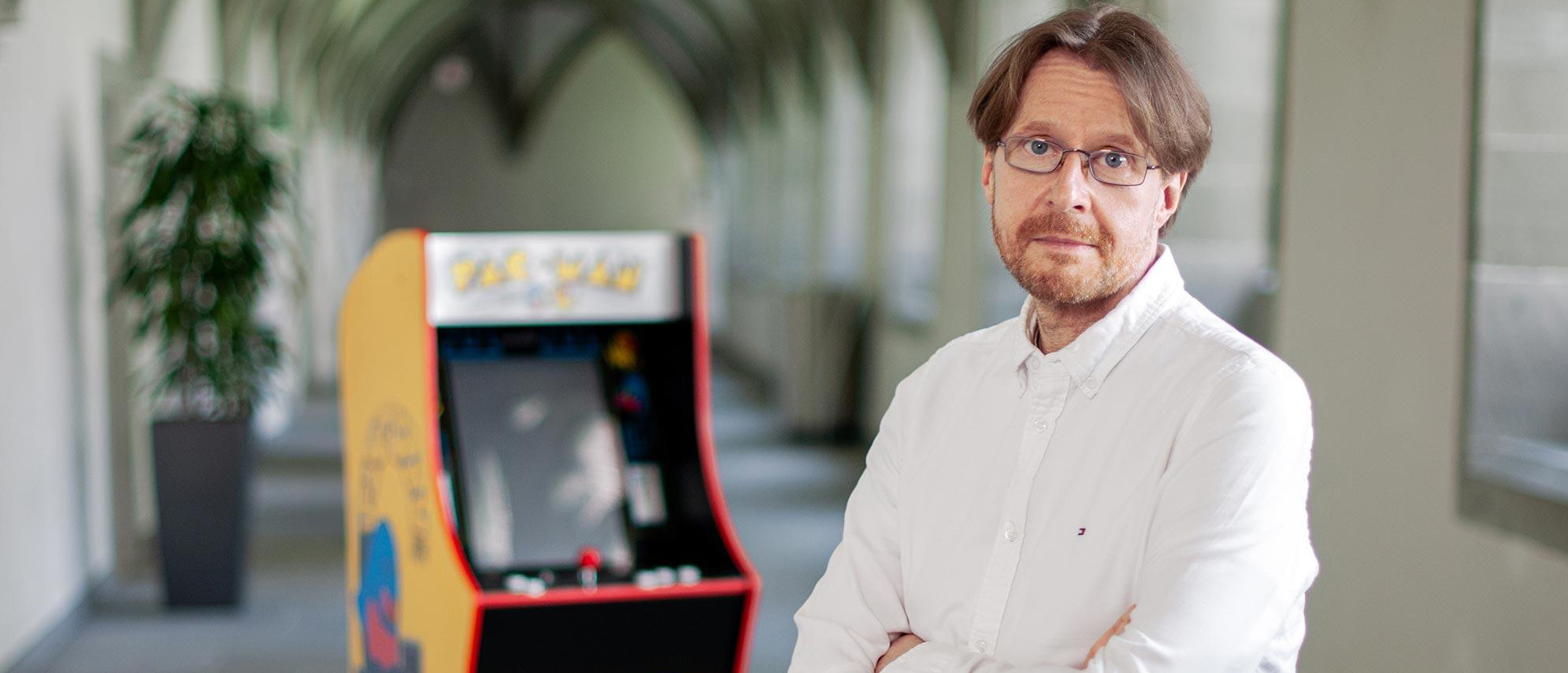
Michael D. Kickmeier-Rust leads the GAPCo project. He holds a PhD in Cognitive Psychology and has over 20 years of expertise in digital game based learning and virtual worlds in education. His research focuses on intelligent tutoring technologies, competence oriented learning models, and the dynamics of learning using approaches such as Cognitive Diagnostic Models and Knowledge Space Theory. Michael also explores how learning analytics and pedagogical measurements can be translated into personalized support and training measures. Michael is the head of the Unit for Personalized Support and Differentiation at the Institute of Educational Psychology at St. Gallen University of Teacher Education (PHSG). He has broad experience in multidisciplinary research projects and advancing innovative approaches to tailored learning experiences.
Katharina Richter
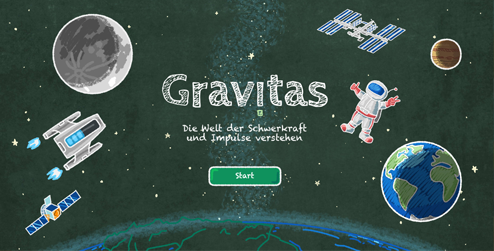
Katharina is a research associate at the Institute of Educational Psychology at PHSG. In her doctoral research, she investigates the reconstruction of everyday conceptions in physics within the simulation-based learning environment Gravitas. The central focus of her work is to examine how domain-specific misconceptions can be identified through theory-driven diagnostic approaches and how epistemically structured interaction can foster their systematic refinement.
Her work integrates cognitive psychology, physics education research, and structured competency modeling based on Knowledge Space Theory and cognitive diagnostic approaches. She develops scalable game-based learning environments that are diagnostically aligned with cognitive learning processes.
Dominik Tschirky
Dominik is an expert in physics didactics; he is affiliated with the Institute for STEM Education at PHSG.
Contributors
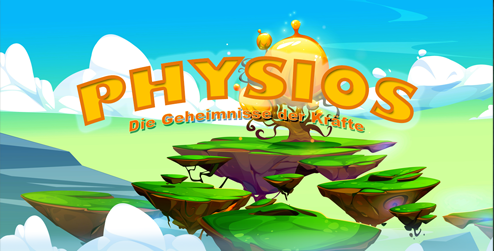
Sanket (Game Development, Physios), Timo Lang, (Game Development, Gravitas), Christina Busse (Graphic Design, Gravitas), Nadine Lange (Administration)
GAPCo is a research project by the Institute of Educational Psychology, St. Gallen University of Teacher Education. The project is funded by the Swiss National Science Foundation (SNF) under grant number 100019_207864. © St. Gallen University of Teacher Education. The project actively engages in open science and contributes to open data initiatives.